Case study
From seventeen tools
to one platform.
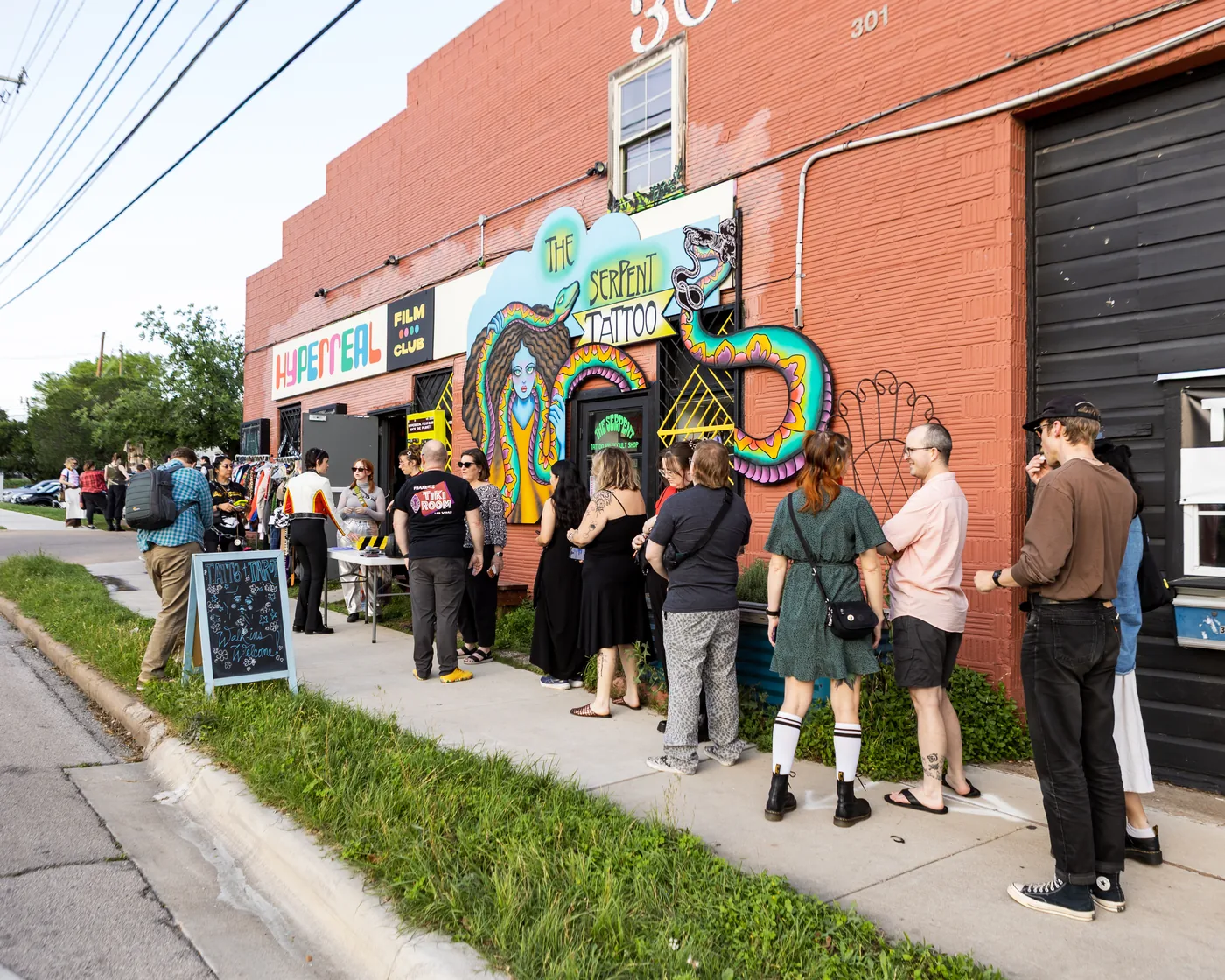
Fusebox Festival programmed 114 events across Austin over five days in April 2026 and ran all of them on Janix — ticketing, comps, campaigns, sponsors and door check-in. The core team is seven people.
- DaysFive
- FootprintCitywide
- Events114
- PlatformsOne
The customer
A nonprofit built to put
disciplines in one room.
Fusebox is an Austin nonprofit and cultural hub for adventurous, only-in-Austin live work — theater, dance, music, film, literature and visual art. It was founded in 2005 by a group of artists frustrated that work across disciplines so rarely shared a room.
The festival itself runs every two years. In between, Fusebox keeps a year-round program of salons, partnerships and pop-ups going, which is why its audience has to matter well past the closing night of any single edition.
- Founded
- 2005, in Austin, Texas.
- Track record
- 1,200+ projects supported. 4,000+ artists.
- Cadence
- Festival every two years, plus year-round salons, partnerships and pop-ups.
- Mission
- Champion adventurous artists. Make only-in-Austin live experiences with the community.
- 2026 edition
- April 15–19. 114 events, citywide. A core team of seven.
The challenge
A team of seven,
running a citywide festival.
Seventeen different software platforms that we were trying to make speak with each other.
Almost none of the difficulty was the events themselves. It was the overhead around them. Pulling a report meant a morning of exporting, deduping, and trying to match the same patron across lists. Some questions never got answered at all.
On a two-year cadence that problem does not sit still, it compounds. Lists age between editions, segments lose their meaning, the email cadence drops and patrons drift. The next edition opens with stale lists, dormant integrations, and most of the operational knowledge sitting in somebody's inbox.
What they were using
Each tool fine on its own.
None of them talking.
- Ticketing
- Donor CRM
- Comps in a spreadsheet
- Sponsors
- Website
- Box office
- …and ten more
Tickets lived in one system and email in another. Donors sat in a CRM bought for fundraising, comps in a Google Sheet, sponsors somewhere else, and the website on its own. Every one of those tools did its job. None of them shared data, so the same patron could exist as a different person in six places at once.
Why Janix
Not a better ticketing tool.
An actual partner.
Fusebox did not arrive with a feature comparison. They arrived with a list of things the festival actually needed: a daily read on which shows wanted marketing attention, a checkout that did not lose people at the last step, a comps system that could handle four kinds of guest across 114 events.
We built against that list, and we were on call through the festival week. Ticketing is too narrow a category for what a festival like this runs on. Fusebox needed one platform for tickets, marketing, audience, sponsors, comps and the door — and one place where all of it added up to the same set of people.
Implementation
Seven needs.
One platform, built to them.
Every row below is something Fusebox asked for, and something that ran during the 2026 festival.
- What they neededWhat Janix ran
- A daily view of which shows needed marketing attention across a five-day run.Event dashboard — capacity, holdback and how full each show was, show by show.
- A clean checkout for patrons, with the price on the page holding all the way through.Absorbed pricing. The displayed price was the price paid.
- Branded reminder emails that included the ticket itself.Campaign tool — header branding, venue maps, and ticket PDFs re-attached to reminders.
- A comps system that could handle VIP, staff, artist and guest tiers across 114 events.Searchable comps with type filtering. An alphabetical view was added mid-festival.
- Frictionless ticket access, with no password-reset chaos.Magic-link login. No password required, ever.
- Door check-in for staff at every venue, across the whole city.Janix Door running on staff phones for the duration of the festival.
- Sponsor logos on event pages, organized and ordered by tier.Sponsor management with custom tier names and drag-or-type ordering.
Results
What five days
across Austin looked like.
Fusebox 2026 ran April 15–19 at venues all over the city. These are the festival's own numbers, out of Janix.
- 5,667Tickets sold across 114 events
- 1,625Unique attendees
- 114Events programmed citywide
- 500Patrons who attended two or more events
- 7People on the core team running it
- 17 → 1Software platforms, consolidated
Five hundred patrons attended two or more events. That is the number the rest of this page is about — not how many tickets moved, but how many people came back.
After the event
The festival ended.
The audience did not.
This is the part that matters most, and it is why Fusebox is the story we tell. The 2026 edition closed in April. Fusebox is still working the audience it built, in the same platform, with the next festival two years out.
On the old stack that gap was dead time: lists aging, integrations going dormant, the next edition opening cold. Now the in-between is where the work compounds.
-
01
Programming between editions
The Salon Series — eight a year — runs on Janix. Those attendees land in the same database as festival ticket buyers, so getting the right invitation to the right person stops being an export job.
-
02
A curatorial pipeline
The artists who showed in 2026 are still making new work. Keeping notes on what they are doing feeds curation for 2028 instead of starting from a blank page.
-
03
Patrons and donors in one place
Who came in 2026, who used to come and stopped, and who is worth a personal follow-up — readable from the same records that hold the donor history.
It was a thrill to work with an actual partner on a ticketing platform. Something we'd never had.
See what Janix could do
for your organization.
Tell us how many events you run, what you are using now, and what you cannot answer today because the data sits in a dozen places. We will tell you straight whether Janix is the right fit.